recent

Latest Products

Showing posts with label OnePlus. Show all posts

Hey! What's up guys I'm Technical Saviour here and OnePlus Nord is here. It's official as you probably already know about this phone by the avalanche in your sub box of YouTube or maybe its your first time hearing about this phone. So, I dropped my first impression about this phone and all the specs and all the official stuffs about it. This is the full review I'm going to button some things up and also just talk about this place OnePlus is in and the truth behind this phone.


So, like I said in  I'll stand by this pretty much every part of this phone is second best for the price meaning there's not going to be a super stand out flagship specs. Any place in this phone but all of them are going to be right up there with the best so the display is maybe the best example of this phone i.e it's a 1080p 90 hertz oled display. So not the bleeding edge highest resolution or highest frame rate but still quite nice and I've said I really like that it's a flat display and that the bezels aren't too thick now to pixel peep a little bit. I do see some off-axis rainbowing and some tint issues but it's minor and overall this screen is better than fine.


Its same with the specs Snapdragon 765 and I'm using the model with 12 GB of RAM and 256 GB of storage now. It's number 800 series and it is UFS 2.1 storage.

Honestly, I just feel a bit slower especially with the heavier stuff like launching the big apps like the games and the camera that's where it's a little more noticeable.But overall it's fine and you know Oxygen OS for me has felt more or less like the same experience as the more expensive OnePlus 8.You have the bonus of 5G compatibility now. About the quality of the phone, the build feels good in the hand wiht metal and glass but that's not entirely true or accurate about this phone so it is glass on the front and the back it's plastic rails along the outsides and metal buttons so it's metal glass and plastic not that there's anything wrong with plastic.
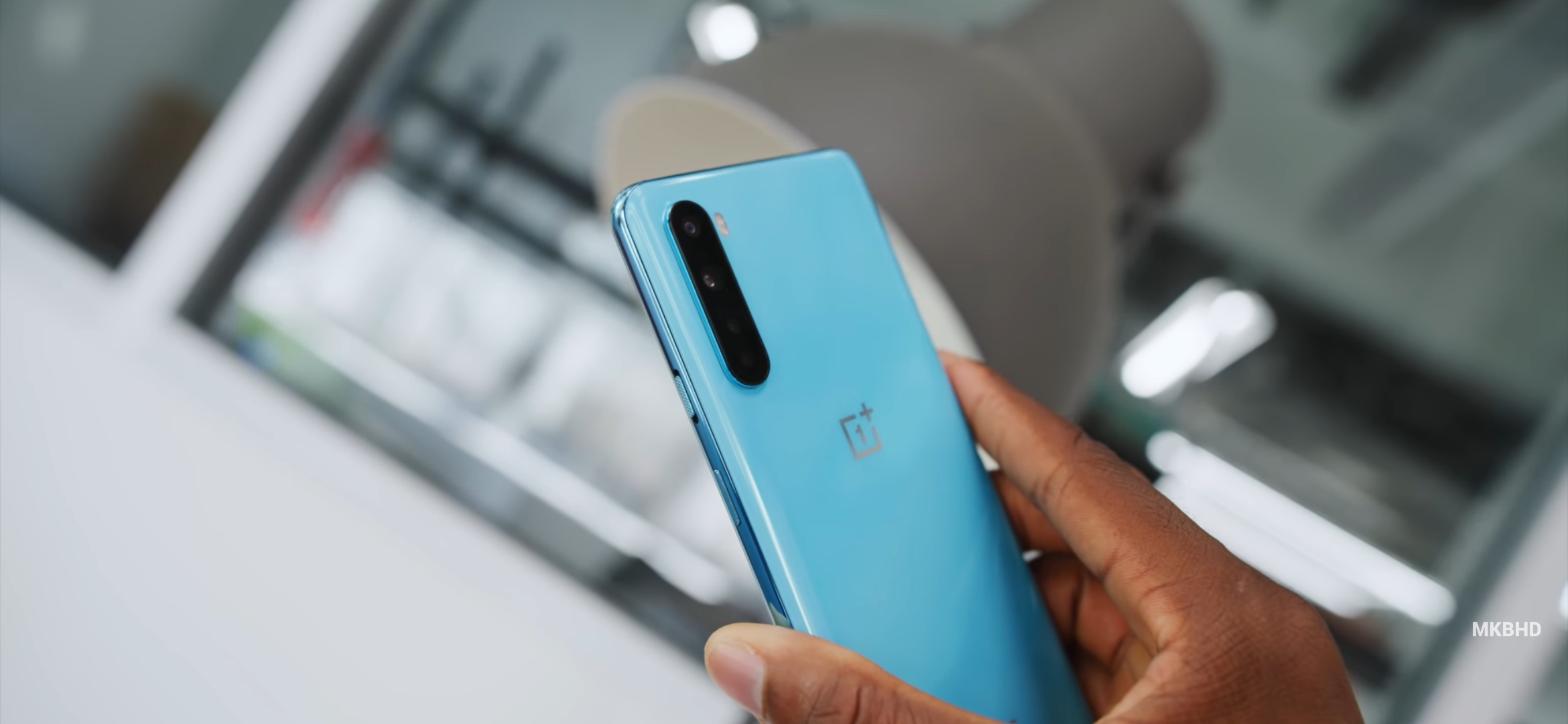


We see it all the time especially in lower priced phones and it's technically more durable than glass a lot of times here it is painted to look like metal but like I said second best. So the other main things that we were waiting for the full review to talk about were the battery life and the cameras so like which do you want first the good news of the bad news . I think most people would probably pick the good news which is the battery and turns out the battery is quite good it's a little over 4 100mAh hours as you may remember and it was getting me comfortably through the end of all types of quarantine days five hours of screen on time no problem ending the lighter days with sometimes 20 or 30 % charge left and it definitely helped massively by it coming with the warp charger in the box.


I can't understate how important that was for this phone now it actually comes with the european plug in the box since this phone's not coming to the US but I happen to already have a US warp charge 30t plug already. Plus there's one in my car I've been a fan of fast charging for a long time so this phone in the battery department definitely doesn't disappoint. Really it's in this price range only second place to like the crazy the more gimmicky energizer phone types you remember that did you guys know energizer made a phone the battery company that was a trip so then the cameras the bad news and really like it's more of it's just kind of a mixed bag at this point. I really think they've fallen victim to their own marketing department's hype so it's a quad camera system on the back all right 48 megapixel main camera with the hardware straight from the OnePlus 8 then an 8 megapixel ultra wide camera and a 2 megapixel macro camera and 5 megapixel depth sensor .
Okay let me try to be diplomatic here.

The main camera is okay. It's the same hardware as the OnePlus 8 but it doesn't quite take the same photos I found it's actually a little bit noisier and little worse overall .But definitely in the same league decent photos if you don't pixel peep too much but once you zoom in you probably won't be too impressed by detail


It's fine the ultra wide camera it does its job with the whole dramatic wide perspective for sure but it's immediately soft so no matter what the lighting conditions.It's just lacking the resolution fundamentally to match the quality of the primary camera in a wider field of view. You'd actually need a higher resolution than the main camera to achieve this but you know maybe that's just for flagships.Nevertheless I'm fine that it's here so you can probably see where this is going .The 2 megapixel macro camera on the back of this phone is just unnecessary because it is so bad and i think even OnePlus would know right away.


It's basically to increase the count of the cameras on the phone and it's not actually here to be a great quality camera and actually you want to know the biggest reason you know OnePlus knows this. OnePlus 8 pro has a macro camera and there's actually a software feature where if you get close to a subject it automatically switches the camera to macro mode because it's a good camera . It's useful it'll be high quality this phone the Nord absolutely doesn't do that it never automatically switches to that separate macro camera because often the photos from this macro camera are actually worse than if you just use the main camera and get as close as you can and then crop in. That's not an exaggeration seriously I tried this a few times and almost every time I just take the photo from the main camera crop in a bit and when you put it next to the macro version it's usually better and this makes the additional camera module
feel pointless.


Then there's the depth camera which in theory should make for some improved portrait shots and they look pretty good mostly with some occasionally quirky edge detection but then I covered the depth sensor with my finger and kept shooting and it didn't complain once and continued to take basically the same quality portrait shots.I think it's pretty clear OnePlus and a bunch of other companies it's not
just them but in phones like this they want to put a triple or a quad camera set up
so that it looks like visually it looks like one of those flagship phones and when you look at the spec sheet it says quad cameras just like a flagship but because it's not and they're trying to save money they have to cut the quality of at least that second and third camera .So here's a crazy idea I don't know if I've said this before but just get rid of those last two cameras that are so bad that they're useless and put that money you save into something else because the camera really is one of those places where you can just cut the fat like that now a place where you can't .The speaker on this phone right, it's a bad single channel .It's a mono
downward facing speaker. You can block it easily low quality tiny not very loud. It's just bad but it's better than not having a speaker at all so they just put that speaker in there and it's functional. But these cameras logical thing to do here is cut it down to maybe one maybe two cameras. If you need them and take the money saved and put them into other things that might be more noticeable like wireless charging or a metal frame or just better primary cameras but either way that's just my opinion. It's something they could do but clearly have chosen not to but that brings us to my conclusion .


Now in case I wasn't abundantly clear I really like this phone and with the promised two years of software updates and three years of security updates, I'm actually confident I could easily daily this phone for a couple years and be happy. But the truth about OnePlus nord is this was inevitable like OnePlus right now doesn't quite have the brand clout to compete at over a thousand bucks. Now that's definitely goals they're getting there they're closing in but still like ask your five closest friends what they think of OnePlus phones and guarantee there's a couple of them that haven't even heard of OnePlus yet. And that is tough to convince people to buy something at over a thousand bucks from a brand they've never heard of over. Apple and Samsung the dominating players and OnePlus knows that so they know their goal is and probably always has been to get to the point where they can compete and sell those high margin thousand dollar flagships but if they do that they're kind of abandoning what got them there in the first place
which is all this name recognition for good high quality cheaper phones. So as their phones year after year after year moved up and up and up over and over again in price. It was inevitable that they had to come up with something down. Here to fill in the gap to keep building that brand cash and keep building that reputation of making good quality phones for the price. While this continues to evolve the only difference now though is they can't make this a flagship killer because they make a flagship now and they're not trying to cannibalize their own sales .
So this has to be a distinctly mid-range separate experience separate branding
separate phone so that it doesn't interrupt with or over lap with their flagship. Honestly we could have seen this coming when these phones came out. Do you think it's co-incidence that for the first time in the years and years and years of OnePlus phones they finally added wireless charging the ip certification just those
last couple things people were asking them to add so that they can compete at the high price. Now they added all those things to this higher end phone to compete of course and make it a better phone but also now it makes a perfect opening for a couple months later OnePlus Nord to slide in and have basically all the same smart trade-offs that they've been doing over the years with their flagships from like
2015 up. Until now what are the down sides of this phone with no ip certification, no headphone jacks,sub-cameras a little bit lower end stuff. But just making the right cut offs and at the end of the day they've made the right trade-offs. If you're shopping for a phone any where under 500 bucks or 500 euros or 30 000 rupees or whatever that magical price range is for you this is something to look at no question easy to recommend easy to consider .But now I'm looking forward to the rest of what the Nord range will bring I think inevitably, there's a version of this that comes to the US and I'll be excited waiting for that so there you go there you have it it's the truth about OnePlus Nord.


Every OnePlus phone launch creates a massive buzz. But not every new handset offers significant upgrades over its predecessors.

 To be brutally honest, going by the company’s track record, every third release seems to hit the bullseye, while the other two are just evolutionary upgrades that OnePlus churns out every six months. The OnePlus 7T was one phone that seemed like a major upgrade over the OnePlus 7 and the 6T and was always going to be a tough act to follow in just two quarters.

OnePlus 8 Review: A good phone that dents your bank balance a bit more than it should

The curved glass design looks very elegant, and the phone feels surprisingly compact despite its big 6.55-inch display.

OnePlus 8 vs OnePlus 8 Pro: What’s missing?

Before we proceed with the review, let’s get one thing out of the way ― what’s missing on the OnePlus 8 as compared to its Pro variant. At the time of its launch, the OnePlus 7T was such a well-rounded device that there wasn’t any compelling reason for many to buy the more expensive 7T Pro. This time around, the company seems to have a clear mandate ― to make the Pro variant look significantly better, even if that happens at the cost of the non-Pro model.

The OnePlus 8 Pro has a handful of new features that have been excluded from the OnePlus 8. Some of the key ones include a 10-bit display with support for over a billion colours and 120 Hz refresh rate, faster DDR5 RAM, wireless charging and IP68 certified dust and water resistance. The Pro variant also gets a far superior camera setup with a newer 48MP Sony sensor, 3X Optical zoom, and a higher resolution ultra-wide camera with PDAF (phase-detect autofocus). All this comes at a premium of Rs 10,000 over the OnePlus 8, with similar RAM and storage.

The reason I wanted to get this out of the way early is because from here on, for the better part of the review, I want to analyse the OnePlus 8 for what it brings to the table and not what’s missing compared to the 8 Pro. So, let’s see what we get.


OnePlus 8 Design: There’s something very nice about it

Though the OnePlus 8 design doesn’t feel striking or unique at first glance, the phone feels very good in hand, though a touch slippery. There are a few subtle changes from previous generations, and they are very effective. The curved glass design looks very elegant, and the phone feels surprisingly compact despite its big 6.55-inch display. Though the OnePlus 7T has a similar sized screen, the company has managed to shave off a few millimetres on each side, making the phone look noticeably smaller than it actually is. It weighs 10 grams less than the 7T too, at 180 grams, despite its Aluminium frame and glass back.


The phone feels great to hold, but it's hard to reach the top of the screen with your thumb unless you have huge hands. This is down to its tall design. To compensate, the in-display fingerprint scanner is placed a little higher than usual, making it easier to access. The scanner is highly responsive too and worked perfectly. Like most of its competitors, OnePlus has done away with the notch and opted for a punch-hole selfie camera near the top left corner of the screen. While I have no issues with punch-hole cameras, I do have a problem with its placement for practical purposes. The screen space on the left of the camera is wasted, and the notifications start from the right of the camera, a good centimetre away from the left edge. Thus, you lose more screen real estate over a centrally located selfie camera with a punch-hole, or even a drop notch.

oneplus-8-camera module

The camera module is quite similar to that of the OnePlus 7, with one extra camera.

The display as well as the back of the phone are protected by 3D Corning Gorilla Glass, making the OnePlus 8 scratch resistant. However, the Onyx Black variant that we got for review does attract a fair share of smudges and fingerprints, especially at the back. This may not be as conspicuous a problem in other colour variants of this phone. Speaking of the back, OnePlus has done away with the Motorola-inspired circular disc for cameras that was present in the 7T and gone back to the vertically aligned camera module at the top centre. It is quite similar to that of the OnePlus 7, with one extra camera.

The SIM tray is present along the bottom edge of the phone and it can accommodate up to two nano-SIMs. The OnePlus 8 is a 5G phone, for whenever the service is available in India. Till then, you can have two 4G SIMs in there. Giving the SIM tray company are a USB Type-C port and the phone speaker. The volume rocker is placed along the left edge, while the power button can be found on the right edge along with the alert slider. Reaching the volume up button is a bit of a stretch (literally), and I wish they had placed it a little lower. No issues with the placement of the power button though.

Bottom edge-1280

Giving the SIM tray company are a USB Type-C port and the phone speaker.

OnePlus 8 Key specifications

  • Qualcomm Snapdragon 865 SoC: 1 x 2.84 GHz Kryo 585 core + 3 x 2.42 GHz Kryo 585 cores + 4 x 1.8 GHz Kryo 585 cores
  • Adreno 650 GPU
  • 6 GB or 8 GB RAM options
  • 128 GB or 256 GB UFS 3.0 internal storage
  • 6.55-inch Full HD+ (2400 x 1080) Fluid AMOLED display with 90 Hz refresh rate and 3D Corning Gorilla Glass
  • Cameras: 48MP with PDAF and OIS (main) + 16MP (ultra-wide) + 2MP (macro); 16MP (wide) selfie camera
  • 4300 mAh battery with bundled 30W fast charger
  • Android 10 with OxygenOS 10
  • 5G compliant; Bluetooth 5.1; Dual band WiFi a/b/g/n/ac/ax

OnePlus 8 Price in India

Rs 41,999 for 6 GB Ram with 128 GB internal storage

Rs 44,999 for 8 GB Ram with 128 GB internal storage

Rs 49,999 for 12 GB Ram with 256 GB internal storage

OnePlus 8 Display: A sharp screen that looks even better in reality than on paper

The OnePlus 8 has a 6.55-inch Fluid AMOLED display with a resolution of 2400 x 1080 pixels and 90 Hz refresh rate. On paper, the specs look similar to that of the 7T, but in reality, it looks even sharper. Despite not supporting a billion colours or 120 Hz refresh rate like the 8 Pro screen, you don’t feel like you’re missing anything. The display is extremely vibrant and smooth.

OnePlus 8-display-1280

The OnePlus 8 has a 6.55-inch Fluid AMOLED display with a resolution of 2400 x 1080 pixels and 90 Hz refresh rate.

The black levels and contrast are excellent ― as it should be with an AMOLED screen ― and colours pop in ‘Vivid’ mode without going over the top. If you don’t like your colours boosted and want them to be more accurate, there’s a ‘Natural’ mode too. The phone also offers you a few manual calibration options in case you’re interested. The screen supports HDR10+ and compatible HDR content from OTT platforms looks noticeably better on this device.

The 90 Hz refresh rate makes things flicker-free while scrolling in compatible apps. You get an option to switch to 60 Hz to save some battery, but personally I preferred to leave it at 90. This isn’t an always-on display, but one can see basic information like time, date, battery status and a few notifications by simply lifting the phone or tapping the screen. As I mentioned earlier, the screen is protected by a layer of 3D Corning Gorilla Glass. The curved edges of the display add a bit of style without hindering any functionality.

OnePlus 8 Performance: As powerful as they come

The OnePlus 8 is powered by Qualcomm’s current flagship Snapdragon 865 SoC and our test unit had 12 GB RAM to go with it. The performance of this device is top notch. With that kind of processing muscle at its disposal, there was absolutely no lag in day-to-day operations, or in any of the popular apps, or even when switching between multiple apps. In performance benchmarks, it posted some unprecedented scores.

In Geekbench 5, it recorded a Single-core score of 919 which was at par with the iQOO 3 (920 points) and 3% higher than Xiaomi’s Mi 10 (893 points) ― both with Snapdragon 865 chips. The Multi-core score stood at 3356, the highest we have seen in Android phones. The iQOO 3 and Mi 10 managed 3315 and 3173 in the same test. In PC Mark Work 2.0, the three phones scored 10847 (OnePlus 8), 10497 (iQOO 3) and 10838 (Mi 10). The Xiaomi handset finally manages to close the performance gap in this benchmark.

In the 3DMark Sling Shot Extreme - Vulkan benchmark, the Adreno 650 GPU used in the OnePlus 8 scored a record-breaking 6719, as opposed to 6632 and 6103 on the iQOO 3 and Mi 10 respectively. The iQOO benchmark scores are close to that of the OnePlus 8, but the Xiaomi noticeably falls behind in this race. To check the performance boost with respect to its predecessor, we compared the OnePlus 8’s scores to the results of the OnePlus 7T (powered by a Snapdragon 855+) in the above benchmarks and found that there was a noticeable jump in most benchmarks. While there’s just a meagre 3 percent increase in PC Mark score, there’s a good 17 to 20 percent jump in Geekbench performance, and upwards of 23 percent in 3D Mark. We must give Qualcomm its due here for adding some significant muscle to the 865 over the 855+.

These are all synthetic benchmarks, and despite who gets bragging rights courtesy of the numbers above, all the phones in the comparison are extremely powerful, and among the fastest in the market today. The gaming performance of this phone was excellent too; no surprises here. PUBG Mobile as well as Asphalt 9 worked flawlessly at the highest graphics settings. The phone didn’t heat up much either, after 30 minutes of gaming. The dual stereo speakers (earpiece and the speakers at the bottom) manage to produce surprisingly good quality output with a decent stereo effect.

Speaking of audio, the OnePlus 8 also supports Dolby Atmos, and while the surround sound effect isn’t that obvious on the phone speakers, it does provide virtual surround and other sound enhancements for most earphones. The phone also supports AptX, AptX HD and LDAC for better throughput over Bluetooth on earphones that support those codecs. The call quality is also good enough, and there is nothing to complain about in that department.

OnePlus 8 Battery performance: Good battery life, improved fast charging

OnePlus has finally gone past the 4000 mAh mark on its non-Pro models. The OnePlus 8 has a large 4300 mAh battery, despite its 8 mm thickness. It easily manages to last 30 hours, up to a day and a half of normal usage, that includes generous use of messaging and social media apps, browsing, a decent amount of calling and clicking a few photos, an hour of watching videos and a half hour of gaming. That is quite an impressive battery life, given the powerful Snapdragon 865 processor and 90 Hz display (which I didn’t drop to 60 Hz at any time).

OnePlus has been at the forefront of fast charging and the case is no different here. The company bundles a 30W Warp charger that charges the phone from 0 to 50 percent in under 25 minutes, and fully in about 65 minutes. Those are impressive numbers again.

OnePlus 8 Camera performance: A step back as compared to the OnePlus 7T

Before we move on to the performance, I would like to shed light on something I touched upon in my initial impressions too ― the choice of rear cameras on the OnePlus 8. OnePlus got their rear camera combination right in the 7T, offering users the flexibility of a 48MP primary camera with PDAF and OIS (optical image stabilisation), 16MP ultra-wide camera with autofocus, and a 12MP telephoto camera for 2X optical zoom. All that the company had to do was not tinker with the combination. Unfortunately, they did.

The OnePlus 8 has a similar 48MP primary camera with OIS and PDAF, but the 16MP ultrawide camera lacks autofocus. Even worse, the 12MP telephoto camera has been replaced by a paltry 2MP macro camera. So, not only does the phone lose optical zoom functionality, but the 2MP camera sticks out like a sore thumb on a flagship phone. The OnePlus 7T has a macro mode despite not having a dedicated macro camera, and that does a much better job than the specialist here.


OnePlus 8 review
Moving on to the performance, the primary camera captures some crisp shots in bright to average lighting with good dynamic range, especially with auto HDR (UltraShot HDR) on. Colours feel slightly saturated ― as is the case with most OnePlus phones ― but not many would complain. Captured images look sharp, with a good amount of detail. The ultrawide camera provides you a 116-degree field of view and gives you more than decent output. The images feel a little less sharp, but the colours look almost as good as that of the main camera. Its overall performance in good lighting is a lot better than the ultrawide cameras you get on most phones around Rs 30,000. But then, this is a much more expensive phone, and one expects it to be a lot better.

The ‘Portrait’ mode works very well on the OnePlus 8, with good foreground and background separation. I don’t remember seeing an option to manually adjust the level of blur, but the camera does a fair job on its own and I didn’t miss that option. The images come out pretty good, be it human subjects or other objects. Occasionally, I noticed that the camera tends to struggle a bit when focusing on light coloured objects, especially white. The focusing issues weren’t limited to portrait mode, and kept cropping up on and off in almost every mode and type of lighting. At times, it felt like the camera had a mind of its own when trying to focus on an object. I figure it’s a software issue and an update should be able to fix it.

All is generally well with the camera department when the light is good, but as soon as it starts to drop, so does the quality of captured images. Low-light photography isn’t a strong point of the OnePlus 8. The main camera still does a decent job in low light conditions, as compared to the ultrawide camera. It tends to gain a lot and makes images brighter even when not using the ‘Nightscape’ mode. Occasionally, normal shots appear even brighter than those captured in ‘Nightscape’, but there is too much noise and loss of detail. With ‘Nightscape’ mode on, the images look sharper and display a lot less noise, but they tend to go soft near the edges. Your hands need to stay steady and give it a couple of seconds to capture and process the image. Mind you, the images look perfectly usable for sharing on social media, but it is only fair to expect better from a phone priced between 45K to 50K.

There is no optical zoom on the OnePlus 8. You do get a 2X zoom toggle, but that’s digital zoom. Again, the images come out more than decent, but not as good as the ones the 7T’s 2X optical zoom can manage. The 2MP macro camera does what a 2MP camera can. The captured images are average at best, and at par with the 2MP macro cameras on phones priced around 15K. I still don’t know what they were thinking, including this camera on such a premium phone.

Like the rear cameras, the 16MP front camera is quite good when your face is well-lit. The captured selfies are sharp, and skin tone looks natural. However, avoid taking portrait shots with it; they can be hit-or-miss. There is one simple, but really cool thing about the selfie camera, and I wonder why other brands haven’t thought of it yet. When you switch to the selfie camera, you get a white glow around it so that you know exactly where the camera is. Otherwise, it is hard to spot in the dark borders of the camera app. Thanks to the white ring, people in the selfie will know where to look.

The rear cameras on the OnePlus 8 can record videos in 1080p and 4K resolution at 30 and 60 fps, and slow motion 1080p and 720p videos at 240 and 480 fps respectively. Captured 4K footage looks sharp and stabilised, courtesy of EIS (electronic image stabilisation). 1080p videos shot on the main camera look quite sharp too, with good colours. There’s also a 4K Cine mode, which basically lets you shoot 4K videos with 21:9 aspect ratio.

OxygenOS and user interface: Arguably the best in Android universe

The OnePlus 8 runs Android 10 out of the box, with OxygenOS 10 on top; OxygenOS 10.5.8 to be exact, with May 2020 security patch at the time of testing. I have said this in the past and I have no qualms saying it again, that this is the best Android UI around, and probably the best feature of OnePlus phones. It is clean, stutter-free, free of ads and bloatware, and adds a handful of useful features without deviating too far from stock Android UI.

If you have used a OnePlus device in the past, you know what I am talking about. If not, you need to experience it yourself. I can go on and on about it but it’s best I leave it for a separate article. Here, it would suffice to say that OxygenOS includes most of the stuff you would need, without burdening you with unnecessary apps and addons. And given the company’s impressive track record when it comes to software updates, expect a few newer versions of Android on the OnePlus 8 in the future


The OnePlus 8 sells in India at Rs 41,999 for the 6 GB RAM/128GB storage variant and Rs 44,999 for its 8 GB RAM variant. You also have a 12 GB RAM variant with 256 GB internal storage- the one that we reviewed here, that will set you back by a Rupee short of 50K. So, should you buy the OnePlus 8? Is it worth the hefty premium over the OnePlus 7T?

Let me answer the second question first. No, and absolutely not, if photography is the most important aspect of a smartphone to you. The 7T scores better in that department and costs you a lot less. The display is also marginally better. But still, 10K is too high a premium to pay for those enhancements. The inexplicably weaker camera department in the OnePlus 8, tilts the scales in favour of the OnePlus 7T.

Coming back to the first question ― and if we were to assume that OnePlus 7T is unavailable for good ― is the OnePlus 8 a good buy? Yes, it is. OnePlus did get a lot of things right with this new phone, if not all, and there’s plenty of goodness on offer here. The design and feel are truly awesome, and so is the display quality.  On the contrary, the battery lasts longer here. And let’s not forget OxygenOS. Considering all these factors, the OnePlus 8 certainly won’t disappoint you.

Ideally, they should have priced the OnePlus 8 a shade under Rs 40,000, given the competition in the budget flagship segment here. If you speak of Snapdragon 865, the iQOO 3 has it too and it is priced at Rs 34,990. The camera department there is more versatile as well. 5G may not be available in India for some time yet, and not everybody needs the processing power of the 865. It is prudent, then, to mention a bunch of smartphones with Snapdragon 855 and 855+ chips and comparable cameras that sell under the 35K mark. Some sell under 30K too ―Realme X2 Pro , Redmi K20 Pro, Lenovo Z6 Pro, OnePlus 7T (again) are all worthy contenders. There’s a Samsung Galaxy S10 Lite lurking around the 40K mark too. The presence of these may make potential buyers feel reluctant to shell out the kind of money that the OnePlus 8 demands.

It wouldn’t be a bad idea for the brand to rethink the OnePlus 8’s pricing here, though it's supposed to be cheaper in India already, compared to other markets.

Pre-booking for OnePlus Nord in India will begin from 15th of July.


As per OnePlus on 21st of July they will be hosting a launch event for one of its budget(affordable) series "OnePlus Nord Series" after a lot of ups and down period.

OnePlus says this may be the world's first smartphone Augmented Reality (AR) launch event.

The OnePlus Nord AR launch are going to be streamed on 21 July at 7.30 pm IST on OnePlus Nord AR App on the Google Play Store and Apple App Store. At the time of writing the story, while the Android app was visible on the Play Store, the one for iOS was only available within the US store.

In 2015, OnePlus had launched the OnePlus 2 during a computer game (VR) event.


OnePlus Nord launch event: Pre-orders India


OnePlus has also confirmed that for patrons in India, the pre-booking for the OnePlus Nord will begin from 15 July on Amazon India at a starting price of Rs 499.

OnePlus also says that customers who pre-order the device will receive limited-edition merchandise from OnePlus as a present .

In addition thereto , users who pre-order the device and complete the acquisition by 31 August will get OnePlus Bullets Wireless V1 and a phone protect free.


OnePlus Nord: What to expect


From what we all know thus far , the OnePlus Nord is probably going to feature a dual-camera setup on the front that houses a 32 MP primary sensor and an 8 MP wide-angle sensor.

As per a previous report, the smartphone is predicted to sport a 6.55-inch Super AMOLED display with a 90Hz refresh rate.As per leaks this phone will be powered by Snapdragon 765 Soc along with 5G. The smartphone is probably going to supply 6 GB of RAM and 128 GB of internal storage.

Triple rear camera is said to be in this phone as said in report. The phone will have main camera of 64 MP, ultra wide camera of  16MP and depth sensor of 2MP. It is expected to deal with a 4,300 mAh battery with the company's 30W Wrap charge.

Stay tuned for further more updates on this.

FREE WORLDWIDE SHIPPING

BUY ONLINE - PICK UP AT STORE

ONLINE BOOKING SERVICE